Skate Repairs
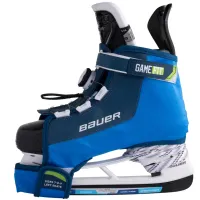
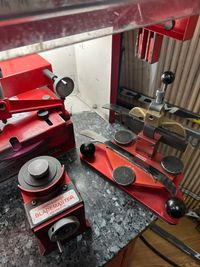
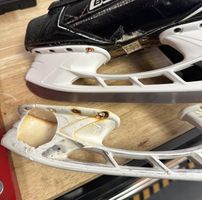
Don't retire your skates just yet. We specialize in replacing and reinforcing the parts that take the most wear — getting your boots back in shape and back on your feet.
Find Your Perfect Setup
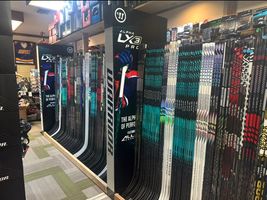
Walking into the hockey stick world can be overwhelming. Flex, kick point, blade curve, sizing — it all matters, and the wrong combination can actually work against your game. Come in and we'll help you find the right setup. Here's what goes into it:
Flex
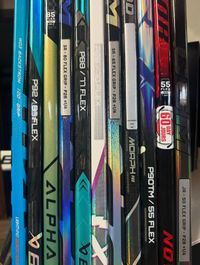
Flex is how much resistance or bend the stick has when you load it for a shot. We factor in your weight, height, experience level, and personal preference to find your number. A stick that's too stiff won't load properly and kills your shot power. Too whippy and you lose control. Get it right and everything clicks.
Sizing
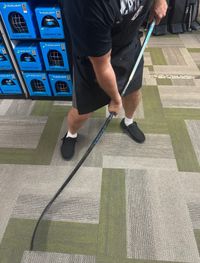
For kids, we size with room to grow — generally top lip to nose when standing on tip toes. They'll be skating in a slight bend anyway, and a little extra length gives the stick a longer life as they develop.
For adults, we recommend chin height as a starting point on tip toes, then adjust from there based on your preference and how you play.
Blade Curve
The curve of your blade affects how you handle the puck, shoot, and receive passes. Here's how the common patterns break down:
P28
— The curve is concentrated toward the toe of the blade. Great for toe drags, lifting the puck quickly, and players who like to use the tip of their blade.
P92 / P29
— The curve starts around the middle of the blade and rolls through (mid-toe curve). A versatile curve that works well for shooting and stickhandling, popular across all positions.
P88
— The blade has an overall curve to it but doesn't curl the way the P92 or P28 do. It sits flatter, accuracy is needed on shots. Passing and receiving passes is effortless.
P90TM
— A mid-toe curve that opens gradually from the heel but opens up significantly at the toe. The toe is rounded, sitting between the P92 and the P28. A great middle ground for players who want some toe action without going full P28.
TM / MX (Max blade)
— This refers to the height of the blade itself, not the curve. A max blade is taller than a standard blade, with the extra height sitting closer to the shaft. It gives you a larger surface area.
Kick Point
Kick point is where the stick flexes when you shoot — and it has a big impact on what kind of player you are.
Low kick point
— Closer to the blade of the stick. Built for quick releases and faceoffs. If you're a forward living in the slot and need to get the puck off fast, this is your stick.
Mid kick point
— Located around the middle of the shaft. The all-around option. Great for players who move positions and need a stick that can do a little of everything.
High kick point
— Higher up on the shaft, close to the handle. Designed for players who live on the blue line and take more slapshots than anything else. The flex loads higher up the shaft, giving you more power on those big wind-ups.
Hybrid Kick Points
— Can be a mix of any kick points. Offers flexibility for players who want the benefits of both quick releases and powerful shots, making it a versatile option.